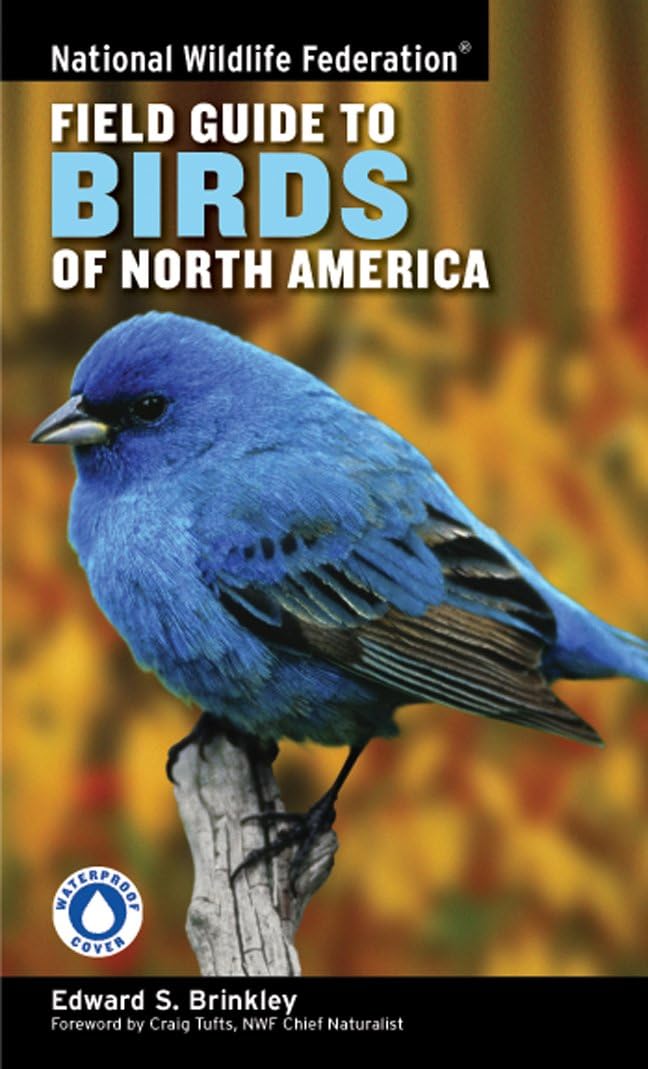

National Wildlife Federation Field Guide to Birds of North America
Product ID: 1852529
Buy anything from 5,000+ international stores. One checkout price. No surprise fees. Join 2M+ shoppers on Desertcart.
Desertcart purchases this item on your behalf and handles shipping, customs, and support to Vanuatu.
Buy National Wildlife Federation Field Guide to Birds of North America on desertcart.com ✓ FREE SHIPPING on qualified orders Review: Almost TMI! But gorgeous and useful. - Almost too much info to deal with, probably easy to use for an experienced birder. I'm a beginner birder, although a long a time bird watcher and appreciator, and while this book seems well organized, sometimes its organization can be confusing in that it presumes you know what grouping, type or family a particular bird belongs to. It starts with a grouping of 8 different kinds of water birds, including shore, sea, marsh, etc., but then moves into game birds like quails & turkeys, followed by raptors. Each group has a different color bar printed across the top of each page to show you're in a different type of bird group, but to a newbie, there doesn't seem to be any reason for how the book is ordered. It does present huge amounts of information, so beginners can learn the basics and still find the book useful as they advance in knowledge and birding skill - if they don't just get overwhelmed! The beginning chapters of the book explain birds and how to identify them! Their physical shapes, sizes, how they look in flight, plumage coloring and types of feathers, body parts, seasonal and age differences within bird types, habitats, songs, ranges, and more. Lots of pictures, charts, maps. In the back, it also provides info on accessing other birding resources, reporting your own sightings, glossary, lists of vagrant, rare endangered and threatened species in North America, and a species checklist and a species index. Each group is introduced with text and one or more photos, explaining the grouping ("pigeons & doves") with commonalities and some background details of the birds within that group; for example, the intro to the "tanagers, cardinals & kin" section shows the various types of female tanagers in a group of photos to make it easier to identify them. Then, individual species or varieties are presented in listings with info text, range maps (which also give info on seasonal aspects of ranges), sometimes a bit of history, and photos with tags for gender,age, etc. It usually gives songs and calls info for each type of bird, so you can use what you hear to help identify the birds.. The best part is the photos. I have books with drawings, but somehow, I can't always tell the birds apart from drawings, no matter how beautiful. The photos here are plentiful, varied, informative, showing male and female of most species, and often immature or breeding plumage. So if you know you found a small woodland bird or a large white shorebird, you can't start your identification by using the groupings and searching through the photos to find your bird. Along the way, you'll end up learning more about similar birds, so each time, it's easier to figure out what bird you've seen. This is really too big to be a field guide, more like a campsite or back-home reference than a carry-along ID book; you'd probably be better off bookmarking an ID website to use on your phone in the field, and then using the book later to make sure of your identification, or to find birds not in the online resource you used. But this guide is fun just to look through, reading sections of interest as you browse, looking at the photos to see what differentiates one similar bird from another. And expert birders can even learn something, too. Review: This is a good addition to your field guide library - This is a good addition to your field guide library, and a good field guide for all of the North American birds. Some books are regional. It has maps on the same page next to the photos of the birds, a feature I feel is essential. The maps also are color coded to indicate the areas you can expect to see the birds in each season. A unique feature of this book is the quick reference guide in the front of the book, with photos of the types of birds and with page numbers for the sections to find those birds. This saves time in looking up types of birds. The book is thick and somewhat heavy for a field guide, but small enough for backpack use. Size is about 4 1/2 by 71/2 inches and an 1 1/2 inches thick. Another feature that is important for me is the check list in the back of the book. I have for years, marked my field guides with my bird sightings. Over the years you see changes to the lists. With each new field guide I move my list into the new book. I have found over the years that If I had not kept a record I would have forgotten many birds that I was only able to sight once in a lifetime. Having more than one field guide is helpful to me, I compare a sighting from one guide to the other to feel confident in my recording a new bird.
| ASIN | 1402738749 |
| Best Sellers Rank | #141,426 in Books ( See Top 100 in Books ) #73 in Natural Resources (Books) #268 in Outdoors & Nature Reference #696 in Adventure Travel (Books) |
| Customer Reviews | 4.8 4.8 out of 5 stars (606) |
| Dimensions | 4.75 x 1.5 x 7.75 inches |
| Edition | First Edition |
| ISBN-10 | 9781402738746 |
| ISBN-13 | 978-1402738746 |
| Item Weight | 1.85 pounds |
| Language | English |
| Part of series | National Wildlife Federation |
| Print length | 528 pages |
| Publication date | May 3, 2007 |
| Publisher | Union Square & Co. |
M**C
Almost TMI! But gorgeous and useful.
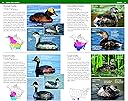
Almost too much info to deal with, probably easy to use for an experienced birder. I'm a beginner birder, although a long a time bird watcher and appreciator, and while this book seems well organized, sometimes its organization can be confusing in that it presumes you know what grouping, type or family a particular bird belongs to. It starts with a grouping of 8 different kinds of water birds, including shore, sea, marsh, etc., but then moves into game birds like quails & turkeys, followed by raptors. Each group has a different color bar printed across the top of each page to show you're in a different type of bird group, but to a newbie, there doesn't seem to be any reason for how the book is ordered. It does present huge amounts of information, so beginners can learn the basics and still find the book useful as they advance in knowledge and birding skill - if they don't just get overwhelmed! The beginning chapters of the book explain birds and how to identify them! Their physical shapes, sizes, how they look in flight, plumage coloring and types of feathers, body parts, seasonal and age differences within bird types, habitats, songs, ranges, and more. Lots of pictures, charts, maps. In the back, it also provides info on accessing other birding resources, reporting your own sightings, glossary, lists of vagrant, rare endangered and threatened species in North America, and a species checklist and a species index. Each group is introduced with text and one or more photos, explaining the grouping ("pigeons & doves") with commonalities and some background details of the birds within that group; for example, the intro to the "tanagers, cardinals & kin" section shows the various types of female tanagers in a group of photos to make it easier to identify them. Then, individual species or varieties are presented in listings with info text, range maps (which also give info on seasonal aspects of ranges), sometimes a bit of history, and photos with tags for gender,age, etc. It usually gives songs and calls info for each type of bird, so you can use what you hear to help identify the birds.. The best part is the photos. I have books with drawings, but somehow, I can't always tell the birds apart from drawings, no matter how beautiful. The photos here are plentiful, varied, informative, showing male and female of most species, and often immature or breeding plumage. So if you know you found a small woodland bird or a large white shorebird, you can't start your identification by using the groupings and searching through the photos to find your bird. Along the way, you'll end up learning more about similar birds, so each time, it's easier to figure out what bird you've seen. This is really too big to be a field guide, more like a campsite or back-home reference than a carry-along ID book; you'd probably be better off bookmarking an ID website to use on your phone in the field, and then using the book later to make sure of your identification, or to find birds not in the online resource you used. But this guide is fun just to look through, reading sections of interest as you browse, looking at the photos to see what differentiates one similar bird from another. And expert birders can even learn something, too.
L**D
This is a good addition to your field guide library
This is a good addition to your field guide library, and a good field guide for all of the North American birds. Some books are regional. It has maps on the same page next to the photos of the birds, a feature I feel is essential. The maps also are color coded to indicate the areas you can expect to see the birds in each season. A unique feature of this book is the quick reference guide in the front of the book, with photos of the types of birds and with page numbers for the sections to find those birds. This saves time in looking up types of birds. The book is thick and somewhat heavy for a field guide, but small enough for backpack use. Size is about 4 1/2 by 71/2 inches and an 1 1/2 inches thick. Another feature that is important for me is the check list in the back of the book. I have for years, marked my field guides with my bird sightings. Over the years you see changes to the lists. With each new field guide I move my list into the new book. I have found over the years that If I had not kept a record I would have forgotten many birds that I was only able to sight once in a lifetime. Having more than one field guide is helpful to me, I compare a sighting from one guide to the other to feel confident in my recording a new bird.
C**S
Complete and Well Designed
I have always had an affinity for birds and have been watching them all my life. Most of the time I never knew what kind of bird I was looking at. Recently I have really started studying them and observing more. I was looking for a complete book with good pictures that was easy to use and I have found the perfect one. This book has excellent quality pictures of each bird both close up and far away, great descriptions of the birds habits, migration patterns, songs and differences between the males and females (they have pictures of each.) Each bird also has a color coded map to show their native habitats and migration patterns. The birds are divided up into color coded section by type of bird like (gulls, ducks geese and swans, hawks etc.) I had no idea that many kinds of sparrow and woodpecker existed!! Excellent reference and very well worth it.
S**K
Excellent photos, great grouping, hours and hours of learning and pleasure
This book is well-made: sturdy spine & pages, feels like it's not going to fall apart for a while. It is well organized, with similar-looking birds grouped together and descriptions that note key differences between species and sub-species. Highlighted maps indicate birds' summer, winter, and migratory ranges to help narrow down which bird you are most likely looking at, given your geographical location. Summaries of bird descriptions identify birds, male & female markings, bird call/songs, habits, and often describe differences in appearance for juveniles vs. mature birds. This book uses photos, not illustrations, which works best for me since I am an amateur bird watcher and can pretty much only say, "I'll know when I see it". I have been using post-it notes to mark the pages and seasons of the birds I recognize around my feeders and in town, hoping to start noticing some trends and just learn to call my new friends by their proper names. Great hobbyist book.
A**C
This is a good book, lots of pages
This is a good book, lots of pages. I think it would be better if the birds were listed by state and not regions. It does not narrow the search down enough. Maybe not for the novice bird watcher. It takes a while to find the bird you are looking for.
B**N
.....that's well worth the money. It has a good strong cover too.
C**N
Excelente opción de compra
R**R
A very good reference guide - photograps and not drawn pictures.
A**R
The best field guide book out there!!!
S**L
Great field guide to add to the collection! Love that it has real photos!
Trustpilot
3 weeks ago
2 months ago